Ten Key Senate Races Decide Midterm Control
Voters in states from Alaska to Texas weigh economic strain and border security in ten pivotal contests that could shift the balance of power in Washington.
By Alina Campbell ·
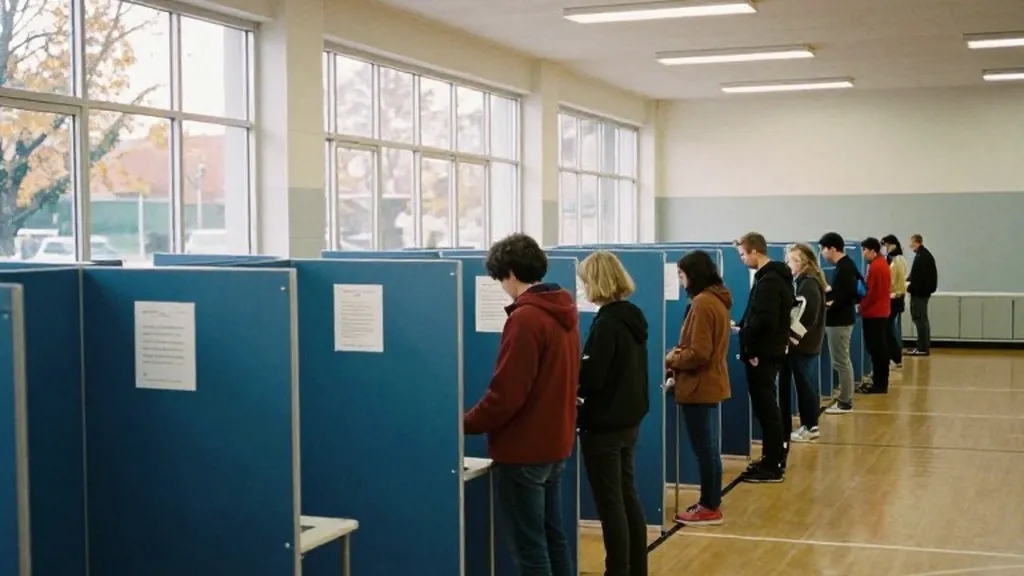
The fate of the United States Senate hangs in the balance across ten critical states on this Election Day, with voters casting ballots that will determine which party controls the chamber for the next two years. With all 35 seats up for grabs, the outcome of these specific matchups will dictate whether Republicans maintain their current majority or if Democrats secure a net gain of four seats. The Associated Press describes the election as a referendum on President Donald Trump's second term, noting that many Americans are struggling with high prices and are angry over an unpopular war with Iran. These ten races serve as the primary battlegrounds where the nation's political direction will be decided in the upper chamber.
In North Carolina, Democratic former Governor Roy Cooper faces Michael Whatley, the former Republican National Committee chair. This contest is particularly significant because Senator Thom Tillis retired after clashing with President Trump. The state voted for Trump by a margin of 3.3 points in 2024, making it a closely watched race. In Georgia, incumbent Senator Jon Ossoff is challenging Republican Representative Mike Collins for the seat. Georgia voted for Trump by 2.2 points in the last presidential election, and polls currently lean or are likely Democratic in this state according to major ratings.
Ohio presents a unique challenge for Republicans as they attempt to hold the special election seat. Former Senator Sherrod Brown is running against incumbent Senator Jon Husted in a race where Trump won by 11.2 points in 2024. The AP notes that Republicans are bracing for potential losses in the House while fighting to keep the Senate, and this Ohio race is central to that effort. Meanwhile, in Michigan, Republican former Representative Mike Rogers competes against Democrat Abdul El-Sayed. The race in Michigan has seen shifts in support, with El-Sayed's former primary opponent Haley Stevens endorsing Rogers just before the election. Michigan voted for Trump by a slim 1.4 point margin in 2024.
Texas remains a pivotal state where Republican Attorney General Ken Paxton faces Democrat James Talarico. President Trump backed Paxton over incumbent Senator John Cornyn during the primary process. The state voted for Trump by 13.6 points in 2024, but the race is seen as competitive due to the high stakes of the midterm. In Maine, Senator Susan Collins is defending her seat against Troy Jackson, the former state Senate President. The AP highlights that economic strain and tariffs have made this traditionally Republican state a toss-up on all four major race ratings. Maine voted for Kamala Harris by 6.9 points in 2024, adding to the unpredictability of the outcome.
New Hampshire offers another open seat as Democrats look to flip a seat held by Jeanne Shaheen, who is retiring. Democratic Representative Chris Pappas faces former Republican Senator John E. Sununu. The state voted for Harris by 2.8 points in the last presidential election. In Minnesota, the race for the seat of retiring Senator Tina Smith features Democratic Lieutenant Governor Peggy Flanagan and Republican Michele Tafoya, a former sports broadcaster, among four candidates. This contest is part of a broader strategy for Democrats to gain ground in the Midwest. The AP notes that one or two seats could tip the balance in either chamber, making these individual contests crucial.
Kansas has emerged as a central location in the fight for Senate control despite being a reliably Republican state. The state has become a focal point for both parties. In Alaska, the Trump administration has filed a lawsuit related to the certification of the Senate result, adding a layer of legal complexity to the race. The state voted for Trump by 13.1 points in 2024, yet race ratings indicate it is a toss-up or leans slightly Democratic. This discrepancy highlights the intense competition in states that previously seemed safe for one party or the other.
The economic mood is heavily influencing voter decisions across these ten states. Only 25% of U.S. Adults approve of Trump's handling of the economy, while about seven in ten say the country is heading in the wrong direction. Many voters blame the president for high prices, a sentiment echoed in the ten battleground states. This economic anxiety is driving turnout, with more than 57 million people having already voted as of Monday. Republicans are relying on high turnout to maintain their Senate majority, while Democrats are cautiously optimistic about their chances to gain seats.
The role of money in these elections is unprecedented, with the 2026 cycle likely to be the most expensive in history. Republican committees have outspent Democratic committees, aided by Trump-affiliated groups and Elon Musk. However, at the candidate level, Democrats have outraised their opponents. The distribution of ad spending has been strategic, with 88.1% of Republican general election TV ad spending going to states and districts that Trump won in 2024. This heavy investment in states like Texas and Ohio reflects the belief that these areas are decisive for holding the Senate majority.
Voters in these ten states are also considering the broader implications of a potential Democratic win. If Democrats take even one chamber of Congress, investigations and possible impeachment proceedings become likely. House Democratic Leader Hakeem Jeffries has outlined a 100-day agenda focused on the cost of living and oversight. A strong performance by Democrats in these Senate races could boost the profiles of potential 2028 candidates like Gavin Newsom and Pete Buttigieg. Conversely, a Republican hold would solidify their control during the final two years of Trump's term, allowing them to shape the legislative agenda without the threat of a Democratic majority.