Economy Tops Ballot as AP Poll Shows 35% Approval and High Price Concerns
With polls open, voters in North Carolina and Florida cite rising costs as the primary driver for their choices in the 2026 midterm elections.
By Samir Doyle ·
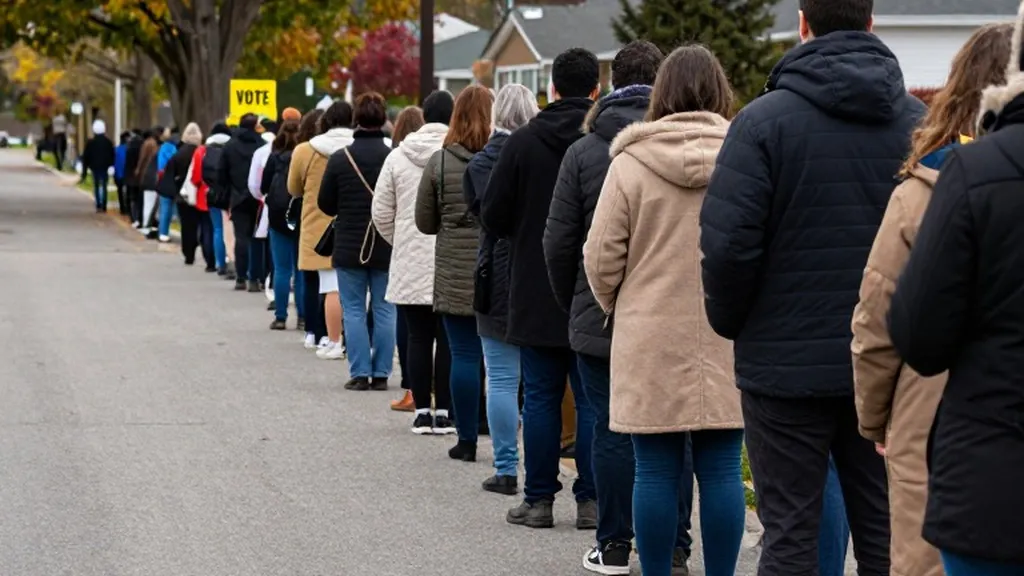
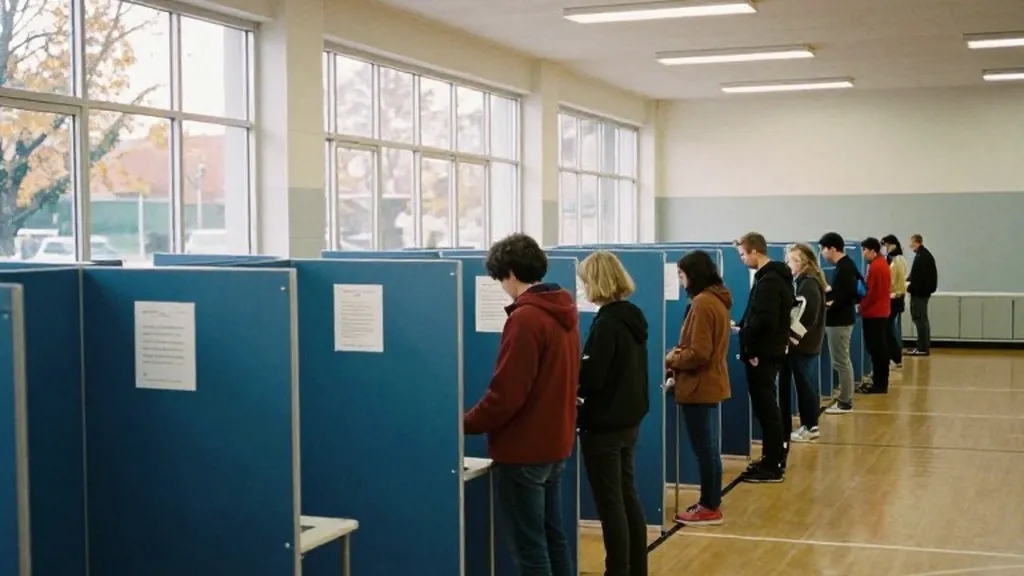
American voters are heading to the polls on Tuesday, November 3, to decide the control of Congress during the final two years of President Donald Trump's second term. The stakes are high as all 435 House seats and 35 Senate seats are up for election. Republicans currently hold a slim majority in the Senate with 53 seats, while Democrats hold 45, plus two independents who caucus with the Democrats. In the House, Republicans hold 218 seats and Democrats hold 214, with one independent and vacancies remaining. The Associated Press describes the election as a referendum on the president's performance, noting that voters are struggling with high prices and are angry over an unpopular war with Iran.
Data released on November 3, 35 percent of U.S. Adults approve of President Trump's job performance. The number drops to 25 percent when specifically asked about his handling of the economy. Approximately seven in ten adults say the country is heading in the wrong direction, with most blaming the president for high prices. This economic anxiety is a central theme for many voters, regardless of party affiliation, as they weigh their options in this crucial midterm contest.
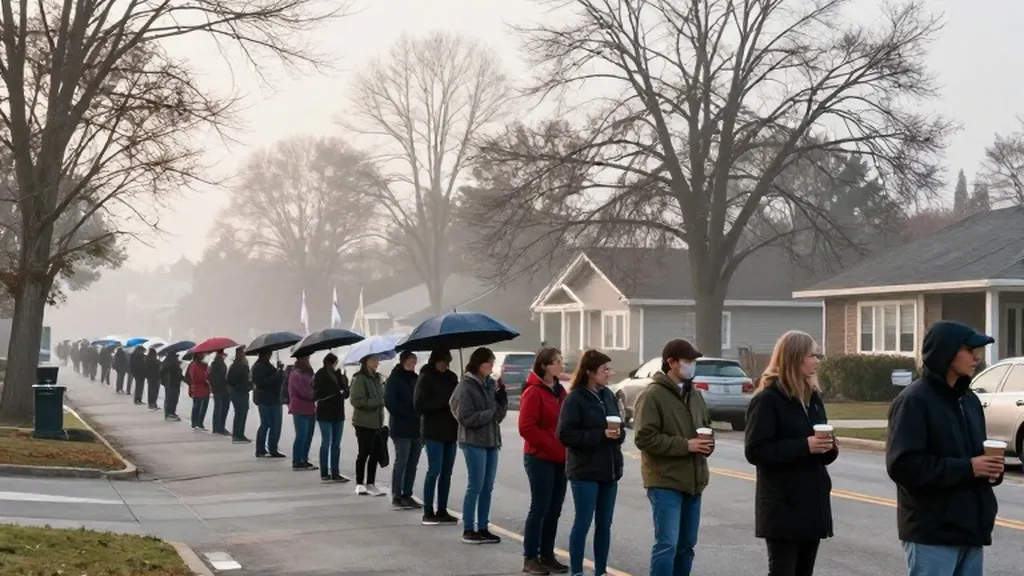
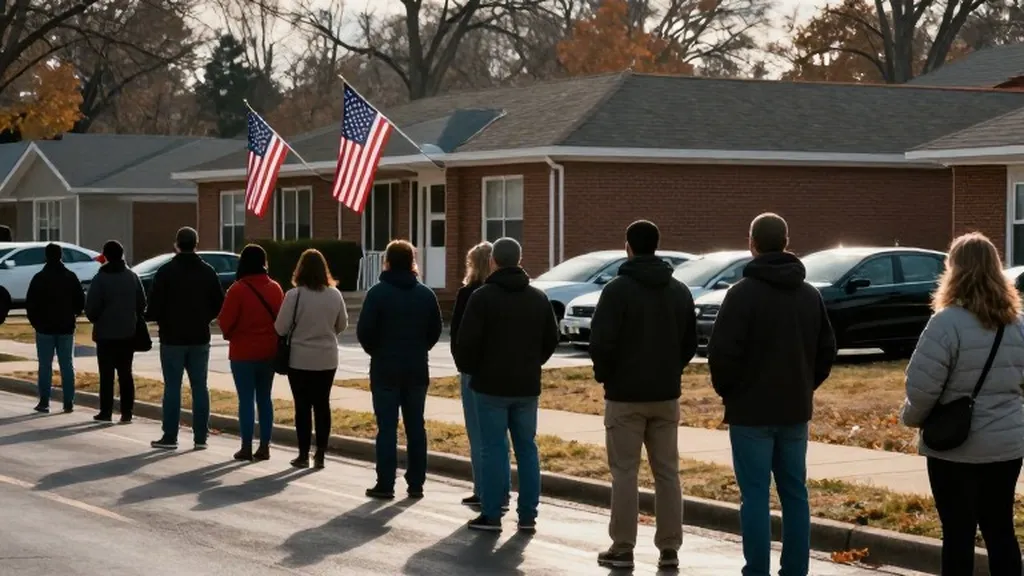
James Moore, a 57-year-old librarian in Raleigh, North Carolina, captured this sentiment while waiting to vote. Moore stated that he is paying more in taxes, more for healthcare, and more for everything else. His experience mirrors the concerns of voters across the nation who feel the weight of inflation and rising costs. In North Carolina, the open Senate seat is a key battleground, with Democratic former Governor Roy Cooper facing former Republican National Committee chair Michael Whatley. The state is using a new congressional map, adding another layer of complexity to the local races.
Conversely, some voters remain supportive of the president's economic record. Mark Barker of Palm Beach Gardens, Florida, told reporters he has been following Trump closely and believes the president is doing an awesome job. Florida is also using a new congressional map and holds a special Senate election for the remainder of the term previously held by Marco Rubio. The state's governor's race is considered competitive, with Republicans holding 26 governorships nationwide and Democrats holding 24. Democrats hope to gain a net two governorships to achieve a nationwide majority, a feat they have not accomplished since 2010.
Turnout is a critical factor in determining the outcome of these elections. As of Monday, more than 57 million people had already voted, surpassing the early vote totals from four years ago in many closely watched states. Republican National Committee Chairman Joe Gruters emphasized that everything depends on turnout, stating that if their voters turn out, they win. This strategy contrasts with the Democratic approach, where Chair Rep. Suzan DelBene noted that the American people are angry and want change. The two parties are bracing for a close contest, with the AP noting that one or two seats could tip either chamber.
Money is playing a significant role in shaping the narrative of this election. The 2026 elections are likely to be the most expensive in history. Republican committees have outraised and outspent their Democratic counterparts, aided by Trump-affiliated groups and Elon Musk. However, at the candidate level, Democrats have outraised their opponents. An AP analysis of AdImpact data shows that 88.1 percent of Republican general election TV ad spending went to states and districts that Trump won in 2024. This includes more than $850 million spent in areas where he won by 10 points or more, suggesting a strategy to consolidate support in safe Republican districts while contesting competitive areas.
The president has held dozens of rallies to energize his base, ending his recent schedule in Salina, Kansas, where he told supporters to pretend he was on the ballot. His schedule included stops in Mississippi, South Carolina, and Texas. Many Republican candidates have kept some distance from the president, reflecting the complex dynamics of a midterm election where the incumbent party often faces headwinds. Trump has continued to make claims about voting fraud, including that noncitizens vote in large numbers, which has led to legal challenges in Alaska and California.
In the Senate, 13 races are considered battlegrounds. These include seats in Alaska, Florida, Georgia, Iowa, Kansas, Maine, Michigan, Montana, Nebraska, New Hampshire, North Carolina, Ohio, and Texas. Race ratings vary, with Maine considered a toss-up by all four major polling organizations. Georgia is seen as leaning or likely Democratic, while Iowa is a toss-up or tilts Republican. The outcome of these races will determine whether the Senate control remains with the Republicans or shifts to the Democrats, impacting the legislative agenda for the next two years.
Governor's races are also pivotal, with 36 governorships on the ballot. Democrats are defending five governorships in states that Trump won in 2024, including Arizona, Kansas, Michigan, Pennsylvania, and Wisconsin. Republicans are defending two in states that Harris won, specifically New Hampshire and Vermont. In Georgia, Republican health care executive Rick Jackson is running against Democratic former Atlanta Mayor Keisha Lance Bottoms. The AP notes that economic strain and tariffs have made states like Maine competitive, where Senator Susan Collins faces Democratic former state Senate President Troy Jackson.
The election administration has seen its share of legal challenges. A federal judge temporarily barred the Trump administration from carrying out a plan to prevent noncitizen voting, citing concerns that it risks disenfranchising eligible voters. Another judge ordered the administration to stop demanding that California election officials segregate ballots cast by people on lists of suspected noncitizens. The U.S. Postal Service has added hours, staff, and special lines to ensure mail ballots are counted on time. Wall Street is watching these results closely, as Reuters notes that the outcome could add to investor concerns about AI spending and debt ceiling negotiations.