House Control Hinges on 46 Battlegrounds as New Maps Reshape Midterm Fight
Republicans hold a 218 to 214 edge, but Democrats need a net gain of three seats to take the House, with new maps in seven states complicating the race.
By Alina Campbell ·
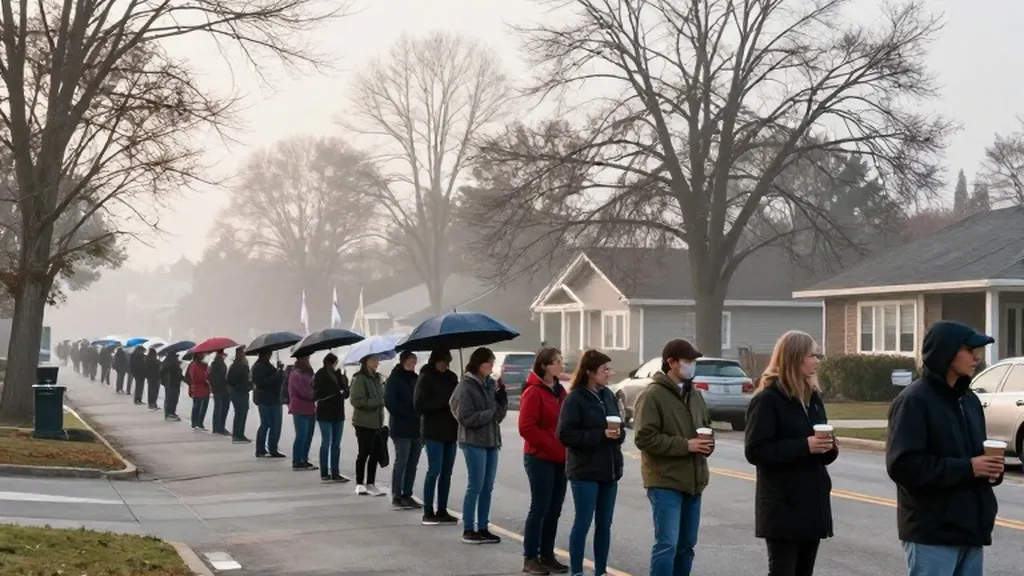
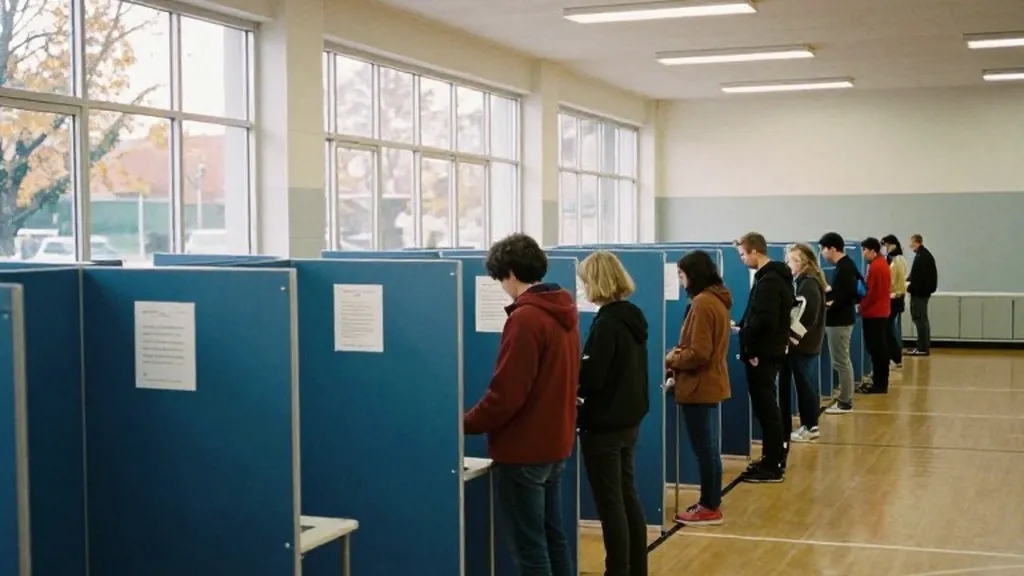
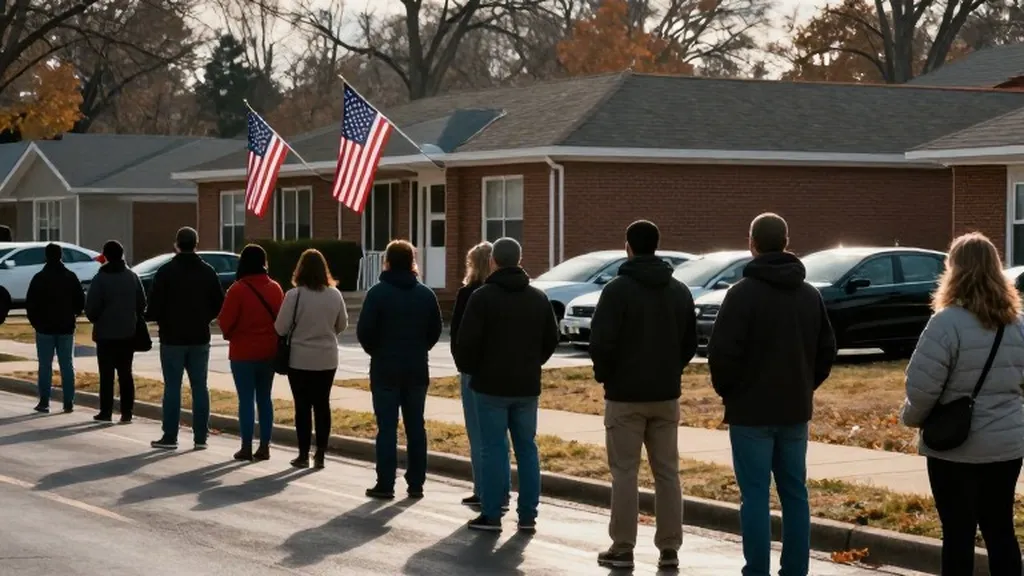
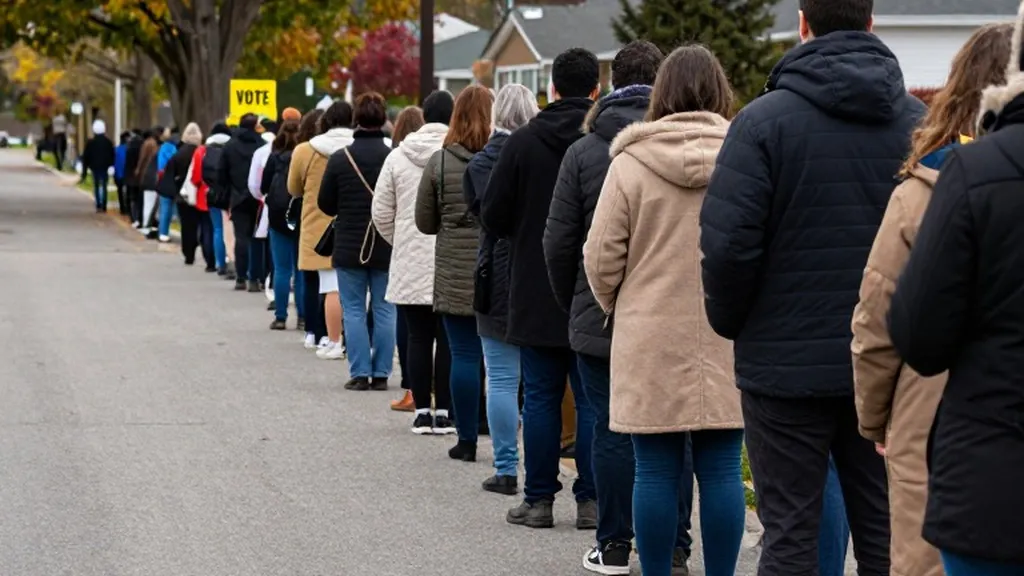
Voters across America are heading to the polls on Election Day to decide the composition of the U.S. House of Representatives, where all 435 seats are up for grabs. The Associated Press describes this midterm election as a referendum on President Donald Trump's second term, with many voters citing high prices and an unpopular war with Iran as key drivers of their choices. Republicans currently hold 218 seats, while Democrats hold 214, leaving the chamber with a tight margin that makes the outcome particularly sensitive to shifts in specific districts.
The mathematical reality of the race is stark for both parties. Democrats need a net gain of three districts to secure a majority, while Republicans can afford to lose no more than two seats to maintain their control. This narrow buffer means that performance in a small number of competitive areas will likely determine the final balance of power in the lower chamber. The stakes are elevated by the fact that 60 incumbent House members, including 37 Republicans and 23 Democrats, are not seeking re-election, creating open seats that often swing more easily than districts with entrenched leadership.
Ballotpedia has identified 46 battleground districts that are considered competitive in this cycle. Of these, 25 are currently held by Democrats and 21 by Republicans. The partisan lean of these districts is influenced by the 2024 presidential results, with 21 Democratic-held districts having voted for Trump and nine Republican-held districts having voted for Kamala Harris. This overlap suggests that voters in these areas are not strictly aligned with one party, making them crucial targets for both campaigns as they seek to flip the chamber.
Redistricting has played a significant role in shaping the landscape of this election, with new congressional maps now in effect in seven states. California, Florida, Missouri, North Carolina, Tennessee, and Texas are using new district boundaries, and Ohio has also adopted a new map. These changes can alter the political demographics of specific districts, potentially making previously safe seats competitive or vice versa. Republicans attempted to use redistricting to beat the historical midterm pattern of losing seats, but analysts note that new districts in Florida and other states may not vote exactly as drawn.
Republican Party leaders are focused on turnout as the primary factor in their strategy to hold the House. RNC Chairman Joe Gruters stated that if the party turns out its voters, they will win, emphasizing that this is the core of their planning. Democrats, on the other hand, are described as cautiously optimistic, with DCCC Chair Rep. Suzan DelBene noting that the American people are angry and want change. This sentiment reflects the broader mood among voters who are grappling with economic pressures and a desire for oversight of the executive branch.
The Associated Press notes that more than 57 million people had already voted as of Monday, surpassing the early vote totals from four years ago in many closely watched states. This high level of early participation indicates strong engagement among both parties, with voters eager to make their voices heard on issues ranging from the cost of living to border security. The volume of early voting has put pressure on election administrators to ensure that all ballots are counted accurately and on time, a task complicated by ongoing debates over election integrity and administration.
Financial resources have been deployed aggressively by both parties, with the 2026 elections likely to be the most expensive in history. Republican committees outraised and outspent their Democratic counterparts at the committee level, aided by Trump-affiliated groups and Elon Musk. However, at the candidate level, Democrats outraised their opponents. Analysis of advertising data shows that 88.1% of Republican general election TV ad spending went to states and districts that Trump won in 2024, with more than $850 million spent in areas where he won by 10 points or more. This strategic allocation highlights the Republican focus on consolidating support in their strongest territories while defending vulnerable seats.
The mood among Republican candidates has been influenced by President Trump's active campaigning, which included dozens of rallies ending in Salina, Kansas, where he encouraged voters to pretend he was on the ballot. Many Republican candidates have kept a certain distance from the president, a dynamic that has been noted by political observers. Trump has also continued to make claims about voting fraud, including the assertion that noncitizens vote in large numbers, which has led to legal challenges and concerns about interference from the Justice Department. These developments have added a layer of tension to the election administration process.
Voters in battleground districts are making their decisions based on a mix of national and local issues, with many citing the economy as the primary factor. In Palm Beach Gardens, Florida, voter Mark Barker said he has been following Trump the whole time and thinks he is doing an awesome job. In Raleigh, North Carolina, librarian James Moore, 57, expressed frustration over rising taxes and healthcare costs, stating that he is paying more for everything. These individual perspectives reflect the broader national conversation about the cost of living and the direction of the country, which will ultimately shape the outcome in the 46 battleground districts.
The final tally in the House will be determined by the performance of candidates in these competitive districts, where the margin of victory could be slim. With polls open and voters casting their ballots, the fate of the chamber rests on the ability of each party to mobilize its base and persuade undecided voters. The new maps in seven states add an additional variable to this calculation, as they may shift the political balance in ways that were not fully anticipated during the redistricting process. As the votes are tallied, the focus will remain on the 46 battlegrounds that hold the key to the future of the U.S. House of Representatives.