Johnson's warning: A DSA-held House brings chaos
Speaker Mike Johnson warned that a Democratic majority would mean two years of gridlock and radical change, a prediction that proved prescient as Democrats swept both chambers.
By Marco Whitaker ·
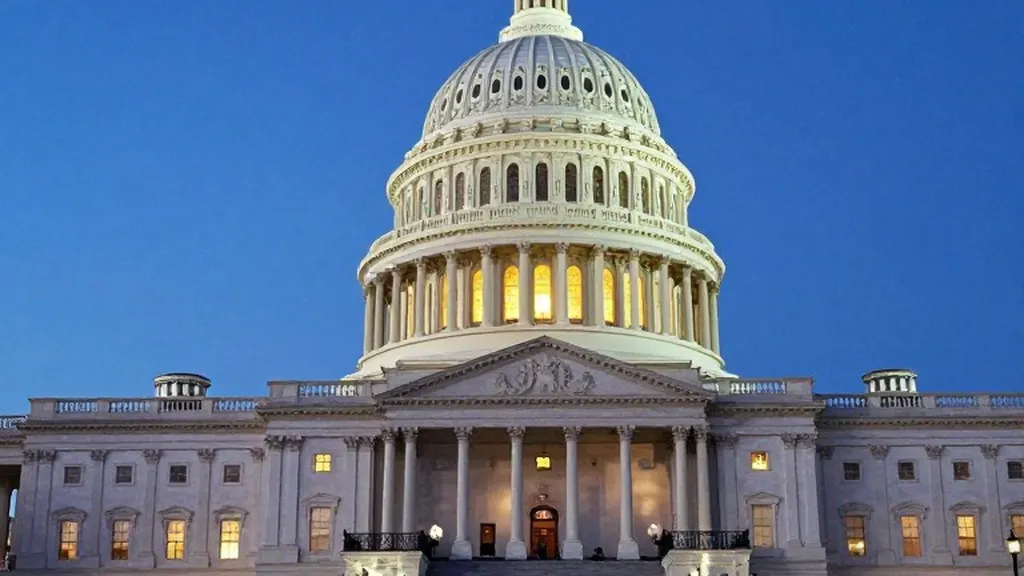
Speaker Mike Johnson spent the final days of the 2026 midterm campaign issuing urgent warnings about what a Democratic House of Representatives would mean for the country. In a USA Today op-ed published on October 30, 2026, and in multiple interviews on Fox News, the Louisiana Republican argued that the Democratic Party had bent the knee to its far-left wing. He cautioned that even a narrow Democratic majority would be held hostage by the Democratic Socialists of America, or DSA, a group he described as a dark harbinger for American policy.
Johnson’s warnings were specific and pointed. He stated that it would be chaos every day for two years in the next Congress if Democrats took control. He emphasized that every vote would count, noting that in the 2024 election, ten House races were decided by 6,000 votes or less. Johnson suggested that voters should ask themselves which set of policies was better for their families, contrasting the Republican record with what he called the radical, far-left Democrat agenda.
The Speaker also drew international parallels to illustrate his point. In his USA Today op-ed, Johnson pointed to France as a preview of where a Democratic-led Congress could lead. He described violent riots in France, including the smashing of buildings and cars and the looting of shops, as the result of decades of misguided policy choices. Johnson characterized the chaos unfolding in France as a dark harbinger of what could happen in the United States if the country embraced similar policies of lax immigration and suffocating regulation.
Old-school Democratic strategist James Carville added weight to Johnson’s concerns by admitting that he would rather Republicans keep the House than Democrats win it by five seats. Johnson cited this admission in his op-ed, arguing that Carville was right because the party would be held hostage to the DSA. Johnson noted that DSA’s platform called for eradicating borders and prisons, granting mass amnesty, and abolishing the Senate, ideas he said were being embraced by the growing socialist cadre within the Democratic Party.
Despite these warnings, Johnson and the Republican majority emphasized that they had delivered historic results during the 119th Congress. In a statement from the Speaker’s office, Johnson highlighted that Republicans delivered 4.6 trillion dollars in lower taxes, the largest middle- and working-class tax cut in history. He also pointed to a 1.6 trillion dollar reduction in wasteful government spending, the lowest violent crime rate in 126 years, and the largest decline in prescription drug costs in 60 years. Johnson stated that these achievements were accomplished despite Democrats forcing three government shutdowns, including the longest in U.S. History.
Johnson’s leadership was commended by conservative leaders who noted his ability to navigate one of the smallest House majorities in history. Former Speaker Newt Gingrich praised Johnson for creating a record for legislative effectiveness that is historic, citing his patience and discipline. Kevin Roberts, President of the Heritage Foundation, described Johnson as a true statesman who delivered consequential conservative policy victories through slimmest congressional majorities. These endorsements underscored the Republican argument that their record was one of results rather than rhetoric.
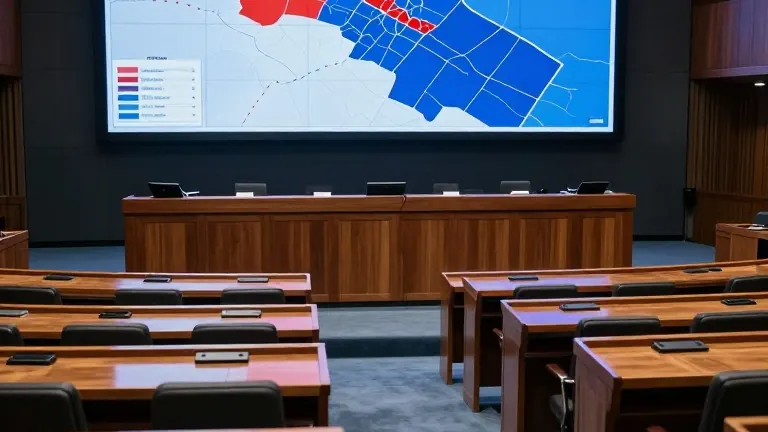
However, the election results have shifted the balance of power significantly. Democrats have won 223 seats in the U.S. House, compared to 133 for Republicans, as of 3:01 AM ET on November 4, 2026. This represents a net gain of 27 seats for Democrats, securing their control of the chamber. Voters took a wrecking ball to the traditional map of political battlegrounds, electing Democrats in states that were long considered reliably Republican. The results indicate a decisive rebuke of Republican governance in Washington.
The election served as a referendum on President Donald Trump’s second term, with voters angry over high prices and the war in Iran. Three-quarters of voters said the economy is not so good or poor, and about eight in 10 said inflation has caused severe or moderate financial hardship. These findings align with Johnson’s warnings about the economic pressures facing the country, though the outcome now places the burden of navigating these issues on a new Democratic-led Congress.
Democrats have swept to majorities in both the U.S. Senate and the House, setting the stage for political gridlock for the remainder of President Trump’s term. Democratic Senate Leader Chuck Schumer called the results a generational remake of the Senate map. With Democrats now holding a majority in both chambers, the focus shifts to how the new leadership will address the issues Johnson warned about, including the potential for increased scrutiny of the administration’s agenda and the implementation of their own policy priorities.
Johnson’s prediction of chaos every day for two years may now define the legislative landscape. The election results represent a shockingly decisive rebuke of Republican governance, ushering in a new era of congressional resistance to President Trump. As the new Congress prepares to convene, the questions Johnson raised about the influence of the far-left wing and the contrast between the two parties’ visions for America will likely dominate the political discourse. The coming two years will test whether the Democratic majority can deliver on its promises or if the divisions Johnson warned about will lead to the gridlock he anticipated.