Democrats seize full control of Congress, shifting power in Washington and statehouses
Voters rejected the president's party in a sweeping midterm defeat, handing Democrats majorities in the House and Senate and control of at least five more state governments.
By Samir Doyle ·
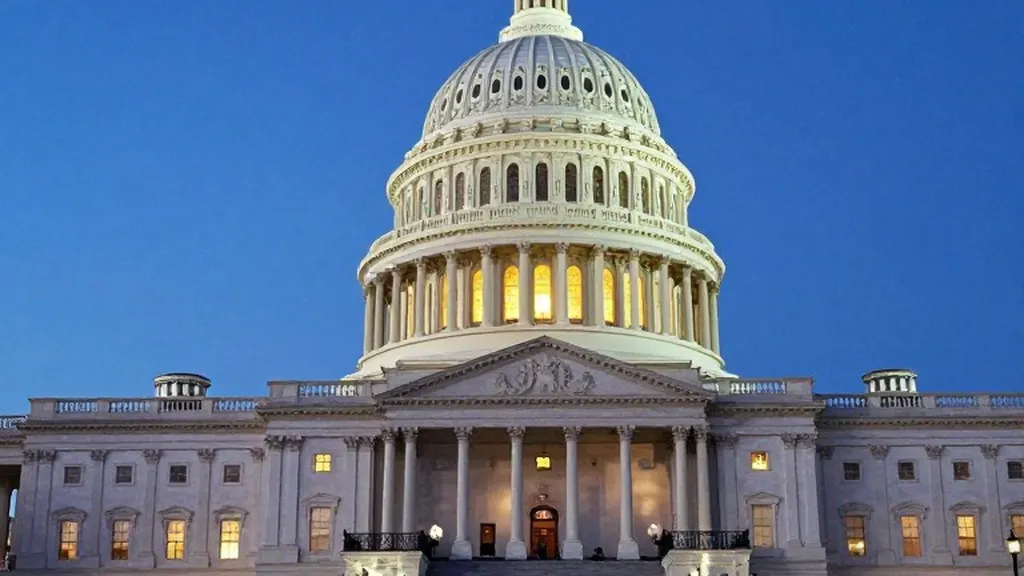
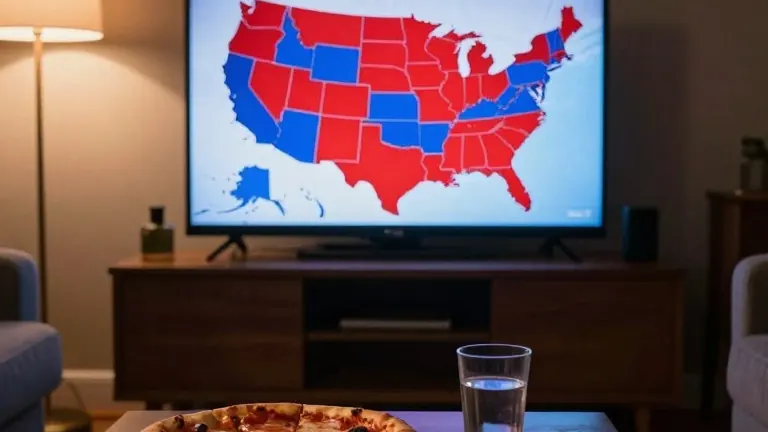
Election Day results have reshaped the American political landscape, with Democrats securing control of both chambers of Congress and making historic gains in state legislatures nationwide. According to Ballotpedia data from November 4, 2026, Democrats won 233 seats in the U.S. House of Representatives, while Republicans claimed 138, a net gain of 30 seats for the minority party. In the U.S. Senate, Democrats captured 20 of the 35 contested races, overtaking the Republican count of 13 to take the chamber majority. This represents the largest single-election shift in partisan power for state and federal governments since 2010, signaling a decisive rebuke of the current administration's policies.
This victory marks the first time since 2002 that Democrats hold a majority in the Texas state House. In that same state, voters elected Gina Hinojosa as the first Democratic governor since 1994, breaking a long-standing Republican hold on statewide offices. Republicans retained control of the Texas state Senate, but the loss of the House and the governorship signals a significant realignment in one of the largest states. This pattern of gains was not isolated to Texas; Democrats achieved full control of state governments in at least five states where they previously shared power, including Michigan, Minnesota, Pennsylvania, Wisconsin, and Nevada.
President Donald Trump, whose party suffered these losses, addressed reporters on Wednesday, focusing heavily on the construction of the White House ballroom rather than the election results. The AP noted that Trump spent nearly 20 minutes justifying the building project before briefly taking questions, where he insisted that if he were on the ballot, he would have won. He suggested that his rallies generated enthusiasm that was not transferred to his candidates, a sentiment echoed by Vice President JD Vance, who blamed the war in Iran for the party's defeat. Trump also warned of potential gridlock, stating he did not want to spend two years vetoing every bill passed by the new Democratic Congress.
Voter dissatisfaction with the economy and the war in Iran emerged as primary drivers of the Democratic surge. The AP Voter Poll indicated that about three-quarters of voters felt the economy was poor or not so good, with eight in ten reporting that inflation caused financial hardship. Roughly half of voters cited government corruption and the cost of living as crucial factors in their decision to vote for Democratic candidates. In response, House Democratic Leader Hakeem Jeffries, who is poised to become the first Black speaker of the House, promised a 100-day agenda focused on lowering gas and grocery costs. He stated that the party is ready to deliver on the dramatic change voters demanded.
The redistricting efforts undertaken by Republicans at the urging of the President have largely failed to secure the expected advantage. The AP reports that in eight states, Republicans redrew congressional boundaries to gain a edge, but voters flipped most of the targeted Democratic seats and retained others. In Texas, where Republicans reconfigured three districts in the Rio Grande Valley, Democratic incumbents Henry Cuellar and Vicente Gonzalez won reelection, while Republican Monica De La Cruz was unseated. Former Attorney General Eric Holder, chair of the National Democratic Redistricting Committee, described the Republican redistricting plan as systematically dismantled, noting that voters chose a new Democratic majority instead.
State legislative results show Democrats breaking or preventing Republican supermajorities in nine chambers across eight states, including Florida, South Carolina, Indiana, Missouri, Iowa, Ohio, Kansas, and North Carolina. In Iowa, Ohio, and North Carolina, this means Republicans will now need Democratic help to override a Democratic governor's veto. Wisconsin Democrats, who broke a 16-year Republican majority in the state legislature, expressed urgency to deliver on economic promises. Devin Remiker, chairman of Wisconsin's Democratic Party, said it is now time to deliver on the mandate, citing concerns over rising living costs and high gas prices as central issues for their constituents.
Democratic control of the Senate also ends an era of rapid judicial appointments for the Republican Party, which had used its majority to reshape federal courts with conservative judges. Reuters analysis suggests that the new Senate composition will influence U.S. Energy and environment policies, particularly regarding data center development and artificial intelligence. The new Democratic leadership in Congress is expected to challenge the President's agenda, with some lawmakers hinting at oversight investigations. Representative Robert Garcia of California, top Democrat on the House Oversight Committee, issued a warning to the administration to lawyer up, while Senator Ron Wyden of Oregon emphasized the need for subpoenas in upcoming inquiries.
International reactions to the U.S. Election results have been swift, with leaders expressing hope for a shift in policy. British Prime Minister Andy Burnham stated he hoped the results would focus minds on ending the Iran war, which has driven up fuel prices globally. Ukrainian President Volodymyr Zelenskiy said he hoped the Democratic gains would generate more support for Ukraine in its conflict with Russia. European far-right politicians began distancing themselves from the results, acknowledging the potential impact on transatlantic relations. The new Congress is set to convene on January 3, 2027, with the new leadership ready to implement their legislative priorities.
The margin of victory in the House was decisive, with Democrats holding a 95-seat lead over Republicans in the called races. This substantial majority provides the new leadership with the leverage to pass legislation without significant Republican support, although the President retains veto power. In the Senate, the Democratic majority is narrower but sufficient to control the legislative agenda. The AP notes that the results reflect a broad coalition of voters, including significant shifts among Hispanic voters who moved away from the Republican party compared to the 2024 election. Nationally, about one-third of Hispanics supported the Republican candidate in their local House race, down from the support levels seen two years ago.