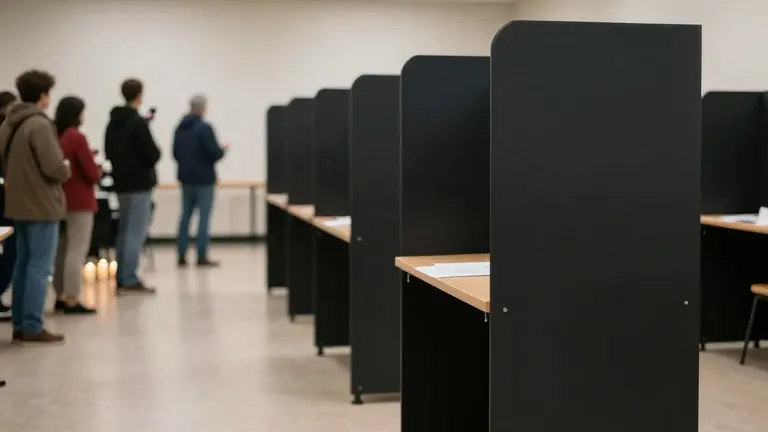
Michigan voters give Democrats 2.4 million votes each for education board seats
Incumbents Judith Pritchett and Tiffany Tilley retained their positions, securing a 6-2 Democratic majority on the eight-member State Board of Education.
By Marco Whitaker ·
Michigan voters returned two Democratic incumbents to the State Board of Education in Tuesday's election, according to unofficial state tallies. Judith Pritchett and Tiffany Tilley each received over 2.3 million votes to win eight-year terms on the eight-member body.
Pritchett, a retired educator, finished first with 2,375,045 votes, representing 27.49% of the total. Tilley, an adjunct professor and real-estate agent, placed second with 2,349,646 votes, or 26.21%. Both candidates were first elected to the board in 2018.
They outpaced two Republican challengers. Terence Collins, a senior financial analyst at General Motors, received 1,975,333 votes, or 22.03%. Bree Moeggenberg, a licensed childcare provider and political canvasser, garnered 1,926,227 votes, or 21.49%. Six minor party candidates also sought the seats.
The result maintains a 6-2 Democratic majority on the board. The State Board of Education is a statewide elected body that hires and fires the state superintendent. It oversees the Michigan Department of Education, sets public school policies, and approves academic standards. The board also provides guidance to the Michigan Legislature on education issues.
Current board priorities include the Michigan Top 10 Strategic Education Plan. This plan outlines state efforts to improve early literacy, raise graduation rates, and expand early childhood opportunities. Both Pritchett and Tilley identified literacy and teacher shortages as the state's most pressing challenges.
Pritchett stated that many rural communities face financial strains that prevent them from supporting school facility improvements. She said she will focus on implementing new laws addressing the state's literacy crisis, including a requirement for all K-5 educators to receive training in the science of reading. She also cited chronic absenteeism and the need to support high-needs students through free meals and mental health services.
Tilley said Michigan must identify students who need additional support sooner and expand evidence-based interventions. She noted that the state cannot address achievement gaps in literacy and math with a one-size-fits-all approach. Tilley said the board should strengthen educator recruitment and retention while improving special education capacity to address barriers to consistent school attendance.