Israelis head to polls as Netanyahu trails Eisenkot
Polls show the prime minister behind his challenger, but the race for a 61-seat coalition remains uncertain.
By Marco Whitaker ·
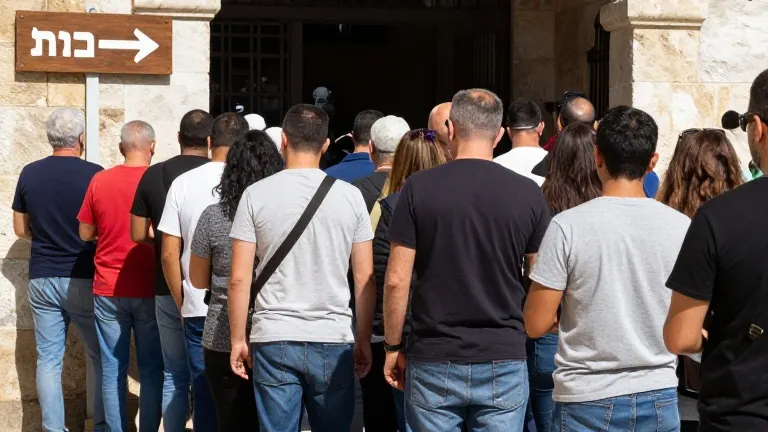
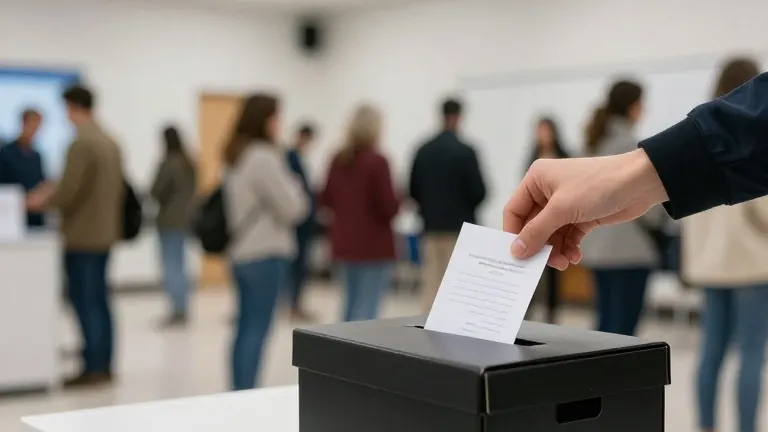
Israel holds its parliamentary elections Tuesday, a vote widely regarded as the most consequential in the nation's history following three years of war. The outcome will determine whether Prime Minister Benjamin Netanyahu continues to lead the country or faces a transition of power.
Recent polling data indicates Netanyahu is trailing in the race against Gadi Eisenkot, a former chief of staff of the Israeli military. The vote is not a direct contest between the two men. Instead, citizens select one of a dozen main parties competing for seats in the 120-member Knesset. The decisive phase begins after the vote, when party leaders attempt to assemble a governing coalition of at least 61 lawmakers.
Netanyahu, Israel's longest-serving prime minister, leads a coalition that includes far-right and ultra-Orthodox parties. His campaign emphasizes military achievements in Gaza, Lebanon, Iran, Syria, and Yemen, along with his relationship with President Donald Trump, who recently endorsed him. Netanyahu is currently on trial for corruption, a matter he describes as politically motivated. Eisenkot, who lost his son Gal in the Gaza war, leads the new center-right party Yashar. He has pledged not to serve under Netanyahu and campaigns on expanding military service among ultra-Orthodox Jews and maintaining an independent judiciary.
Two predominantly Arab parties are running, including the United Arab List. The party has stated it is willing to partner with Jewish parties to address issues such as housing and infrastructure. However, most major Jewish parties, including Eisenkot's, remain hesitant to rely on Arab parties for a majority. This hesitation creates a risk that the anti-Netanyahu camp falls short of the 61 seats required to govern.
Key issues include accountability for the October 7, 2023, attacks, in which approximately 1,200 people were killed and 251 were taken hostage. Opposition leaders promise to establish a state commission of inquiry, a step Netanyahu has resisted. The election also centers on the role of religion in the state, with Eisenkot supporting broader military conscription for ultra-Orthodox men. Netanyahu's coalition has supported settlement expansion in the West Bank and efforts to limit the power of the courts, positions that have drawn international scrutiny and domestic protest.
If neither candidate secures a clear path to a majority, several scenarios are possible. Eisenkot's allies could form a minority government with external support from Arab parties. Netanyahu could agree to a plea deal to step down in exchange for a senior ministerial role. Alternatively, a deadlock could leave Netanyahu as a caretaker prime minister, forcing a repeat election next year. Likud billboards are already promoting a scenario where the party claims the election was stolen, a move that could complicate the transition.
Neither leading candidate currently supports the establishment of a Palestinian state in the near future. Their differences focus on democratic institutions, West Bank policy, and international alliances. Netanyahu's partners have pushed for annexation and a weaker supreme court, while Eisenkot presents a more institutional approach. He has opposed construction in the E1 area near Jerusalem, which critics argue would further divide the West Bank. The election determines the direction of Israel's alliances at home and abroad, as well as the independence of its institutions.