Israel Votes: Tight Race Leaves Path to Majority Uncertain
Polls show Netanyahu and Eisenkot nearly tied, with neither bloc projected to reach the 61 seats required for a stable government.
By Alina Campbell ·
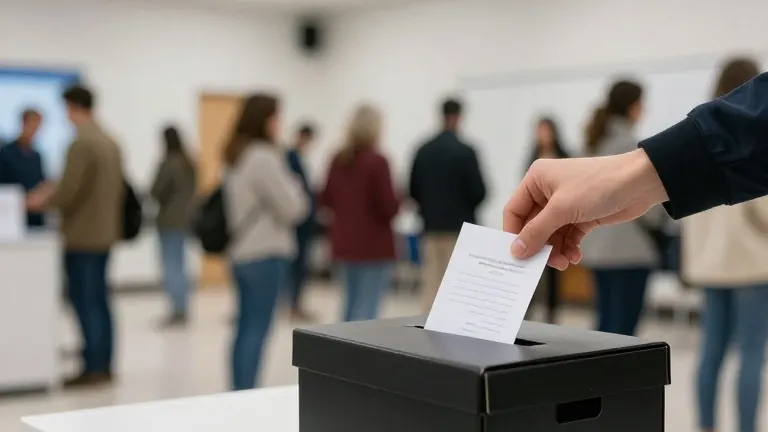
Israeli voters head to the polls Tuesday in a contest where the outcome remains undecided. Polling data released Friday shows incumbent Prime Minister Benjamin Netanyahu and former military chief Gadi Eisenkot locked in a near tie for the top position. However, projections indicate that neither man’s political alliance will secure the 61 seats needed to form a majority government in the Knesset.
The race has centered on security and the handling of the October 7 attacks. Opposition leaders have criticized Netanyahu for the security failures that allowed Hamas militants to kill nearly 1,200 people and take 251 hostages. They have demanded an independent commission of inquiry, a step Netanyahu has resisted, arguing it would target him specifically.
Netanyahu has positioned himself as the country’s security guarantor. He cites strategic victories in regional conflicts and his close relationship with US President Donald Trump as evidence of his effectiveness. Eisenkot leads the Yashar Party, a new formation that anchors the "change bloc" seeking to remove Netanyahu from power.
This opposition coalition includes ideologically diverse leaders. Right-wing figures Naftali Bennett and Avigdor Lieberman, both known for hardline security stances, sit alongside Yair Golan, a former general with left-leaning views. For Netanyahu, a return to power depends on holding his current governing coalition together. This alliance, described as the most right-wing in Israeli history, includes far-right and ultra-Orthodox parties.
The arithmetic is complicated by the presence of two Arab party blocs. Roughly one-fifth of Israel’s population is Arab, many of whom identify as Palestinian citizens of Israel. While these parties could theoretically act as kingmakers, all but one of the leading Jewish parties have ruled out formal coalitions with them.
Campaign issues have also focused on democracy and conscription. Critics point to Netanyahu’s ongoing corruption trial, which he denies, and his judicial reform plans that sparked mass protests before the war. A major point of contention is the failure to enforce a Supreme Court ruling requiring the conscription of ultra-Orthodox Jewish men in full-time religious study, a move that divides the population as thousands of other men fight in recent wars.
In the final days of the campaign, reports emerged that Netanyahu pushed for military action against Iran before the vote. Channel 12 reported that Defense Minister Eyal Zamir opposed a last-minute strike, while CNN reported that Netanyahu sought approval from Trump for new strikes, which the US president refused. Netanyahu denied both accounts. He also posted an AI-generated image of a nuclear bomb hitting Tel Aviv, a move Eisenkot called hysterical.
Eisenkot has pledged to end Hamas rule in Gaza within 18 months, using a US-led peace plan or military force if necessary. Israel has continued striking the territory almost daily since last year’s ceasefire, targeting Hamas operatives. The Gaza health ministry, whose figures the UN considers reliable, says more than 74,000 people have been killed since the war began.
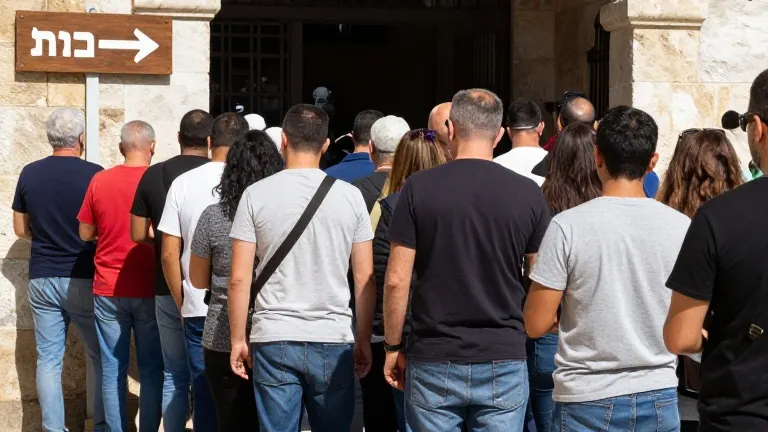
Voting is already underway with an unprecedented 70,000 Israelis reportedly returning from abroad to cast ballots. Hundreds of thousands are voting for the first time. Israeli broadcasters will publish exit polls at 22:00 local time on Tuesday. However, many votes from soldiers and reservists will not be counted until Wednesday, a delay that may benefit right-wing parties with strong support in that demographic.
If no bloc reaches a majority, Israel faces the risk of political deadlock. In that scenario, new elections would be called, and Netanyahu would remain as interim prime minister. This mirrors the period between 2019 and 2022, when Israel held five separate elections due to failed coalition negotiations.