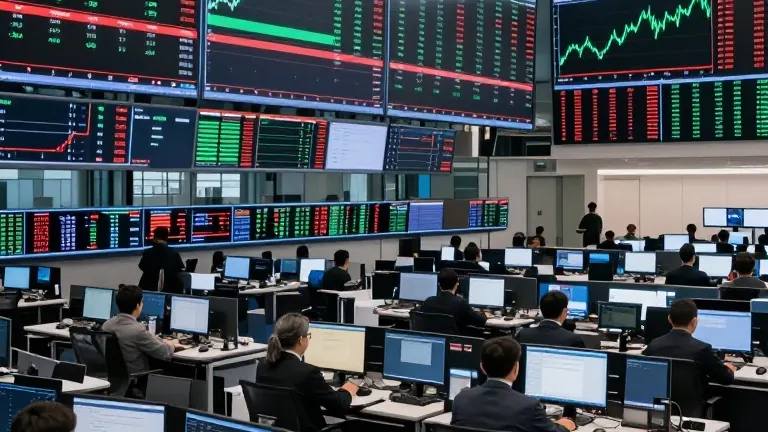
Breaking: Markets Crash 4.3% as Democrats Win and Data Center Moratoriums Loom
A $2.5 trillion wipeout in tech stocks followed the midterm sweep, driven by new state restrictions on AI infrastructure.
By Alina Campbell ·
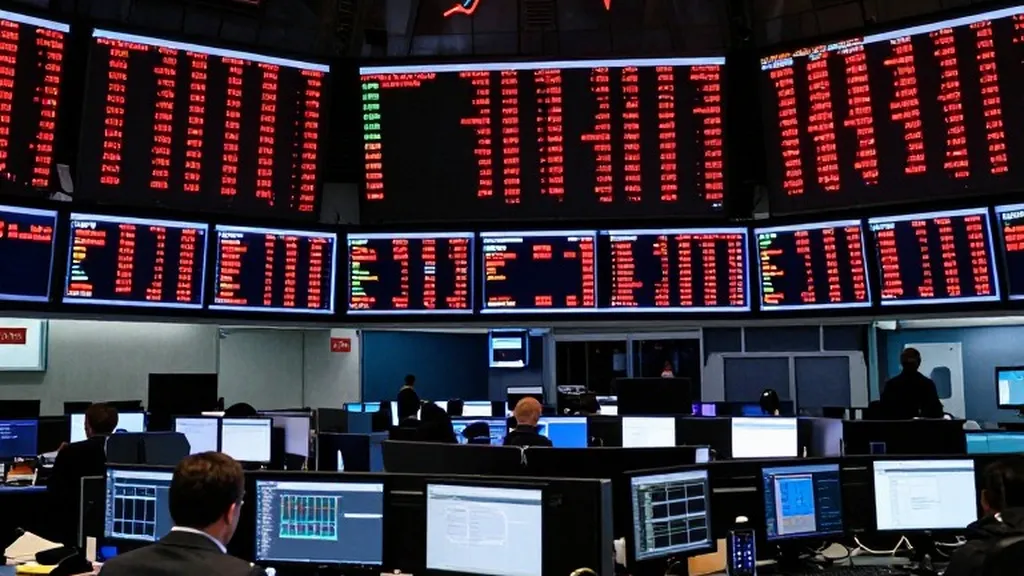
The stock market suffered its steepest decline in more than a year on Thursday, with the S&P 500 falling 4.3 percent and the Nasdaq Composite dropping 5.5 percent. The Dow Jones Industrial Average, which tracks 30 large US companies, lost more than 1,800 points, a drop of 3.4 percent, to close at 51,868. This sharp reversal erased all the gains investors had made on Wednesday, when the Dow had posted its biggest daily gain of the year. For savers and 401(k) holders, the day represented a significant hit to portfolios, as the selling pressure spread across every sector of the S&P 500 and accelerated throughout the trading session. The S&P 500 experienced its worst day since April 2025, when President Trump announced sweeping global tariffs.
The primary catalyst for the sell-off was the Democratic sweep of the House and Senate in Tuesday's midterm elections. Democrats campaigned across the country on a platform that included slowing the spread of data centers and artificial intelligence. Dozens of ballot measures aimed at restricting data center development were voted on in local jurisdictions, and voters rejected these facilities in a series of local ballots. These results heightened concerns that the facilities at the heart of the AI build-out would face new hurdles, particularly in states with large concentrations of planned projects. This political shift directly threatened the expansion plans that had fueled the recent tech rally.
In Texas, Democrat Gina Hinojosa won the race for governor after campaigning on an immediate moratorium on new data center construction. Her victory, alongside Democratic wins in other states with significant planned infrastructure, signaled a tougher regulatory environment for AI companies. Investors began to weigh whether these tighter state-level restrictions could slow data center construction and pressure companies tied to the artificial intelligence trade. This local political action compounded broader market concerns that the huge sums being spent on AI might not pay off, leading to fears that AI shares could be in a bubble. The combination of political headwinds and valuation worries triggered a widespread exit from tech stocks.
The damage was particularly severe in the technology sector, with the Magnificent Seven companies shedding about $1 trillion in value in the single trading day. Nvidia fell 9.2 percent, becoming the biggest faller in the Dow and losing more than $400 billion in market value. Other major tech names also declined sharply, with Tesla falling nearly 11 percent and SpaceX dropping 8 percent, which took more than $300 billion off the value of Elon Musk's companies. The Philadelphia Semiconductor Index, which tracks 30 of the largest chip companies, fell more than 12 percent. It has now dropped more than 30 percent since the beginning of October and sits almost 40 percent below its peak in June.
Volatility in the market spiked as fear gripped investors. The Cboe Volatility Index, known as the fear gauge, jumped as much as 5.7 points to above 28 about 90 minutes after the opening bell. This was its highest reading since March 31, 2026, the day after the S&P 500 bottomed during the Iran war tensions. The VIX rose 61 percent on the day. By midday, nearly 800,000 VIX call options had traded, a volume that was 3.5 times the 30-day average. The 10-year Treasury yield fell to 4.83 percent, its lowest since September, as investors moved into bonds as a safe haven from the equity market turmoil.
Analysts described the day's trading as a capitulation event driven by the political shift. Neil Wilson, an investor strategist at Saxo UK, said a complete capitulation-level event was playing out in tech stocks. He noted that the fear was a total momentum unwind as Democrats paced the frontier and kiboshed the data center buildout. Dan Ives, a tech analyst, stated that there was no way to sugarcoat the fact that Democrats taking control, especially over the Senate, would create major hurdles for AI and tech legislation in the Beltway over the next two years. He said the midterm results were a clear sign that the pace of data center build-out would start to slow.
The tech industry itself began to acknowledge the backlash. Greg Brockman, president and co-founder of OpenAI, said at the WSJ Tech conference in Napa, California, that everyone had been surprised by the reaction to data centers. He emphasized that more work was needed to bring communities on board, noting that the industry could no longer just tweet that projects would be good and needed to be physically present in those communities. Dina Powell McCormick, president of Meta, told the same conference that the industry needed to put more effort into making the case for AI. She said they needed to double and triple down on telling the story to counter the growing political resistance.
Despite the panic, some strategists saw the selling as an opportunity. Gene Goldman, chief investment officer at Cetera Financial Group, said the sell-off had become exaggerated as selling accelerated through the day. He predicted a recovery, noting that corrections in a bull market are typically short-lived and that while it was ugly right now, he believed a bounce back would occur soon. Frank Cappelleri, founder of CappThesis, pointed out that the Nasdaq was higher 12 months after the election in all but one of 13 midterm cycles since 1974. However, he cautioned that the path could be a volatile one, citing the 2018 cycle where a sharp December sell-off followed the initial rally after Democrats won the House.
More Business · Buyer Beware · Report a business · Got a Story?