Berg Releases 'The Mosquito Bowl' Depicting WWII Marine Football Game and Okinawa Casualties
The film adapts Buzz Bissinger's 2022 nonfiction work to tell the story of four young athletes who played a Christmas Eve match in Guadalcanal before the brutal Battle of Okinawa.
By Alina Campbell ·
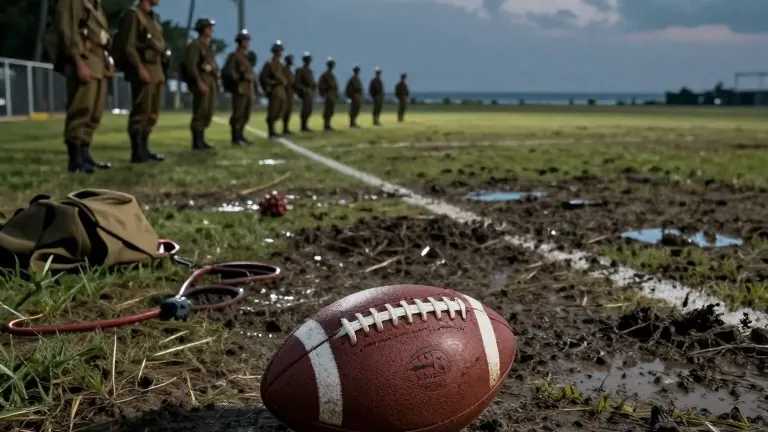
Director Peter Berg has released his new feature, The Mosquito Bowl, which centers on a real football game played between two Marine regiments at Guadalcanal on Christmas Eve, 1944. The film is an adaptation of the 2022 nonfiction book of the same name by journalist Buzz Bissinger. Bissinger previously authored the book that inspired the 2004 film Friday Night Lights. This new project joins Berg's previous directing credits, which include Hancock, The Kingdom, and Friday Night Lights.
The narrative follows four specific individuals based on true figures. Tom Francis portrays Dave Schreiner, a quiet University of Wisconsin player who resents his opponent after a loss. Bill Skarsgård plays Bob Bauman, a Wisconsin teammate and close friend of Schreiner. Ray Nicholson, the son of actor Jack Nicholson, stars as Tony Butkovich, a fullback for Purdue University. Nicholas Galitzine portrays John McLaughry, who graduated from Brown University and was drafted into the NFL before the war began. The film presents these men as young adults who initially viewed the conflict through the lens of athletic strategy and competition.
The story progresses from basic training to the island of Tarawa, where the characters experience their first major battle. Although the four men were not in the same regiment in real life, the film groups them together for dramatic effect. This sequence introduces the audience to the physical toll of combat, including injuries from flamethrowers and gunfire. Following this initial engagement, the film depicts the titular Mosquito Bowl, a game described as the most exhilarating section of the movie. This brief period of normalcy allows the characters to engage in the sport that defined their pre-war lives.
The film concludes with the Battle of Okinawa, a campaign that proved fatal for many of the participants. Three of the four main characters die during this engagement. The source material notes that 15 of the 65 men who played in the Mosquito Bowl were killed on the island. Berg uses this final act to illustrate the rapid loss of youth and the intensity of the Pacific theater, contrasting the earlier football game with the heavy casualties of the island assault.
The production relies on a script adapted from Bissinger's text, which details the lives of these young athletes. The film aims to capture the specific experience of men who believed they could apply game-day tactics to warfare. It highlights the disparity between the structured environment of football and the chaotic nature of combat in the Pacific. The casting choices bring a recognizable face to the role of Butkovich, while the other actors portray the specific backgrounds of their characters, from Wisconsin farm life to Brown University education.
The movie explores the psychological shift these men undergo as they move from the field to the front lines. The narrative structure moves from character introductions in the United States to the harsh conditions of basic training and then to the Pacific islands. The inclusion of the football game serves as a central pivot point in the story, offering a moment of joy before the final confrontation. The film does not shy away from the physical details of the battles, showing the immediate effects of bullets and bayonets on the young soldiers.
Berg's approach to the material involves a detailed look at the lives of these four men prior to and during the war. The film emphasizes the personal relationships between the characters, such as the friendship between Schreiner and Bauman and the rivalry with Butkovich. The opening scenes provide context for what the men are leaving behind, including family responsibilities and collegiate careers. This setup is designed to ground the audience in the human elements of the story before the action begins in the Pacific.
The release of The Mosquito Bowl adds a new title to the genre of war films that focus on specific historical events and individual stories. By adapting a recent book, the project brings a contemporary perspective to a mid-20th-century conflict. The film serves as a visual retelling of the events surrounding the Guadalcanal game and the subsequent losses at Okinawa, providing a focused look at the cost of war for a specific group of young Americans.
More Business · Buyer Beware · Report a business · Got a Story?