Gulf Nations Push Four-Day Hormuz Reopening Deal to Halt US-Iran Conflict
Regional mediators propose a strict timeline for reopening the strait and withdrawing Houthi forces to secure a truce with Washington.
By Marco Whitaker ·
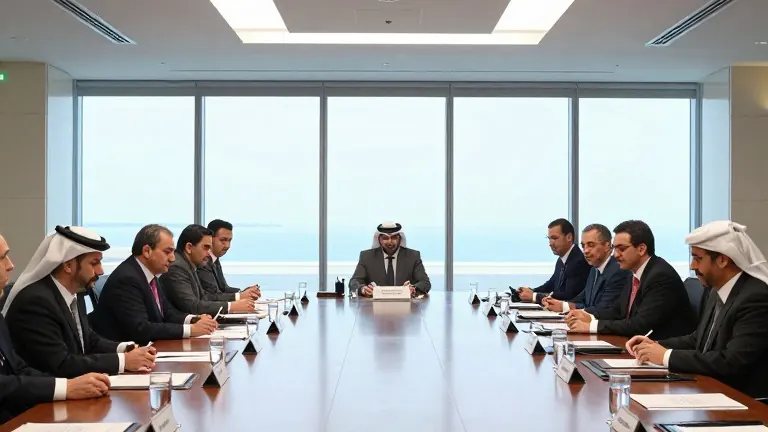
Gulf states are finalizing a multipart peace plan designed to stop a renewed war between the United States and Iran. The proposal centers on two immediate actions. Iran must reopen the strait of Hormuz within four days of sanctions lifting. It must also withdraw substantial Houthi forces from Yemen.
Washington knows the details of the talks but is waiting for a specific concession before agreeing. European powers suggest that concession involves allowing UN weapons inspectors back into Iran. This would mark a shift from the current impasse where Tehran refuses full access.
British Foreign Secretary Ed Miliband pressed this point during a meeting in New York with Iranian Foreign Minister Abbas Araghchi. Araghchi stated that Iran is only prepared to talk in principle about its nuclear program. European diplomats view access to bombed nuclear sites as the minimum requirement for a breakthrough with President Donald Trump.
Tehran is focusing on the economic guarantees it will receive in return for reopening the strait. Dr. Ali Bagheri, deputy secretary of Iran's national security council, said the country is willing to shorten its timeline. The original proposal required seven days after sanctions relief. The new offer cuts that window to four days.
Signs of flexibility are also appearing on the Yemen front. Iran appears to be accepting a mediating role in the conflict there. Mohsen Rezaei, secretary of the supreme national security council, met with Houthi ambassador Ibrahim al-Dulaimi on Tuesday. This meeting occurred 24 hours after a high-level delegation from Saudi Arabia, Turkey, and Pakistan traveled to Tehran.
That delegation discussed Saudi terms for ending the Yemen conflict and a long-term security architecture for the region. Iran backs the Houthis and can influence their decisions. Many analysts say a Houthi military victory is unobtainable, making diplomatic solutions more attractive. The Houthis are currently demanding that Saudi Arabia lift what they regard as a naval and air blockade of their territory.
During the meeting with the Saudi, Turkish, and Pakistani delegates, Iran kept its nuclear program off the agenda. It steered the discussion toward a long-term regional security vision. This vision would include the Gulf states and Iran while reducing or ending the US presence in the Middle East. A new non-aggression pact would end the ostracism of Iran by the rest of the Gulf, a status dating back to the 1979 Islamic Revolution.
A commitment to this pact from six Gulf states might make it easier for Iran to accept difficult tactical concessions on its nuclear program. Oman's Foreign Minister Badr Albusaidi is a key advocate of this inclusive security plan. He said he believed the US administration understood the region is heading in this direction.
Albusaidi noted that if Iran is fully re-engaged, the economic potential for the region and outside participants would be enormous. He added that there is general acceptance that this will be the direction of travel once a deal is in place. Araghchi also stressed the importance of a postwar security pact at a televised event in Iran this week. He said he is already thinking about the postwar period and that Iranian policies remain the same whether there is war or not.