Ukrainian Drone Maker: AI Guides Final 500 Meters of Attack
Yaroslav Azhnyuk says the technology gives a smaller force an asymmetric edge against larger Russian capabilities, though he notes human operators still select the targets.
By Alina Campbell ·
Yaroslav Azhnyuk argues that artificial intelligence provides Ukraine with a decisive tactical edge against Russia. The founder of The Fourth Law and Odd Systems asserts that AI allows smaller forces to compete with larger armies by increasing speed and precision. He states that when one side possesses capabilities an order of magnitude higher, it gains an asymmetric advantage that can make that side 10,000 times more effective.
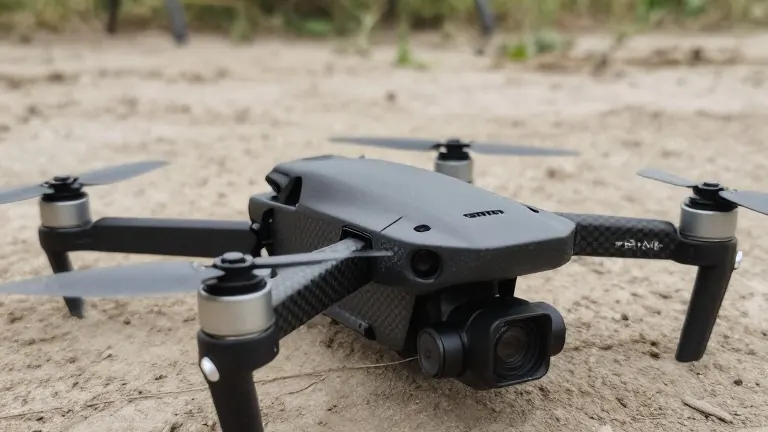
The Fourth Law produces the Lupynis-10-TFL-1, an autonomous drone used by dozens of Ukrainian military units. The system combines a standard first-person-view drone with an onboard computer. During the final 500 meters, or 0.3 miles, of a flight, the AI takes control from the human pilot. Azhnyuk describes the technology as simple image recognition software that allows the drone to navigate or select targets without human input.
Azhnyuk, 37, previously founded Petcube, a company that made AI-powered pet cameras. He sold one million devices in the United States that allowed owners to watch their pets and throw treats. After Russia's 2022 invasion, he pivoted his engineering focus to defense. He described the shift as moving from cameras that fling treats to cameras that fling explosives at occupiers.
The Fourth Law names its weapons after Ukrainian intellectuals persecuted by Russia. The Lupynis drone honors Anatoliy Lupynis, a poet who endured Soviet imprisonment. Azhnyuk says naming the drones this way helps resurrect the memory of these figures. He states that their ideas remain with the company and are now fighting back against the same enemy that suppressed them.
In a test field outside Kyiv, a team led by a technician using the call sign Stab demonstrated the drone's capabilities. Stab pointed out the microcomputer and camera housed in a 3-D model on the drone. He explained that the device runs on a deep-learning neural network trained on hours of combat footage. The system is designed to recognize tanks, light-armored vehicles, and flying objects.
A pilot using the call sign Professor flew the drone to a dilapidated car on a dirt road. After selecting the target, he released the control stick. The drone locked onto the vehicle, indicated by a red flash on the monitor, and flew itself to the impact point. Stab noted that the AI makes the drone difficult to jam and ensures it stays on course. He emphasized that humans still select the initial target, providing a safeguard against rogue behavior.
Azhnyuk acknowledges that AI technology is developing rapidly. He admits it is not unthinkable that drones will make their own target-designation decisions in the future. However, he maintains that current systems are essentially calculators rather than killer robots. He argues that if Russia uses AI for offensive decision-making, Ukraine must use it for defensive decision-making to survive. He notes that AI systems process data in microseconds, while human control takes minutes or hours.