Spain's Rail Network Faces Safety Scrutiny After Second Fatal Crash in a Year
A collision in Toledo killed 68 people four weeks before the national election, prompting the government to declare a three-day period of mourning.
By Samir Doyle ·
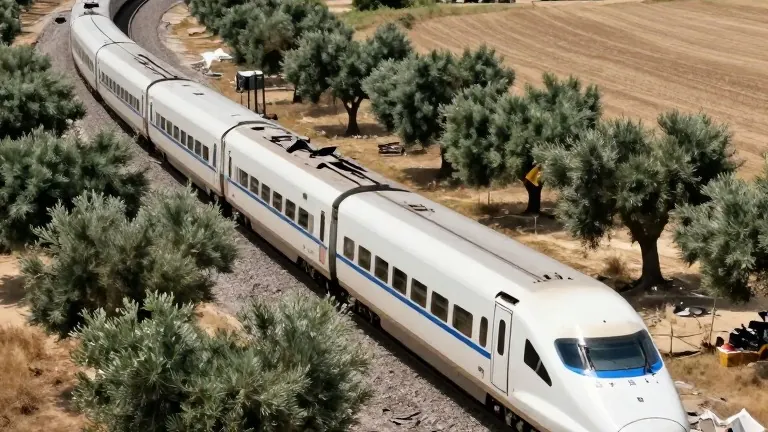
The high-speed rail line between Toledo and Madrid became the site of a fatal collision on Wednesday morning, killing 68 people. The accident occurred in the central province of Toledo, where a moving train struck a stationary one from behind. Regional authorities confirmed the death toll and reported that dozens of injured passengers were being treated in local hospitals.
This is the second deadly high-speed rail disaster in Spain this year. In January, 46 people died in southern Spain when a train derailed and collided with another moving in the opposite direction. Before 2026, the network had not experienced a fatal crash since its launch more than three decades ago. The system, which ranks second only to China in total track mileage, carried 45 million passengers last year.
Spanish Prime Minister Pedro Sánchez visited the crash site near the town of Urda. He pledged a full investigation and promised improvements to rebuild public trust in the rail system. Sánchez stated that it is unacceptable for Spain to endure two major high-speed train accidents in a single year. His government declared three days of national mourning beginning Thursday.
The timing of the crash complicates Sánchez's political standing. National elections are scheduled for four weeks from now. Polls indicate the Prime Minister faces an uphill battle for reelection. He had called for early elections earlier this month, hoping to capitalize on voter dissatisfaction with housing costs and high rents. Just one hour before the crash news broke, Sánchez posted on the social media platform X that there were many reasons to be optimistic about the country.
Both fatal crashes this year involved trains operated by the state-owned company RENFE and the private operator IRYO. Spain opened its high-speed rail market to competition in 2021, with IRYO beginning service in 2022. Transport Minister Óscar Puente faced questions from the media about whether he would resign following the incident. He said his focus remained on managing the aftermath of the collision rather than his future in the cabinet.
Puente explained that the crash resulted from a failure in the central command system. A computer malfunction stopped the security system on a 63-kilometer stretch of track at 8:30 a.m. All trains on that section halted. The IRYO train stopped near Urda, while the RENFE train was 15.5 miles behind it. Minutes later, the central command instructed the RENFE driver to start moving again without speed restrictions. The train collided with the stationary IRYO service at 8:53 a.m. Puente said the RENFE train should have remained stopped or moved at a reduced speed because a stop signal was still active.
Political rivals are using the disaster to criticize the current administration. Alberto Núñez Feijóo, the leader of the Popular Party, demanded a full investigation. He announced that his party canceled its campaign events for the day to respect the victims. He noted that while the party respects the dead, Spaniards are asking tough questions that require answers. Santiago Abascal, the leader of the far-right Vox party, issued a sharper critique. He described the government as a criminal organization and vowed to work until it is held accountable in court.
Emergency workers, firefighters, police, and soldiers worked throughout Wednesday to rescue survivors and recover bodies. Late in the day, crews began using cranes to lift and move sections of the damaged trains. The incident has intensified debate over the safety protocols of a rail network that is a major source of national pride and a key driver of tourism.