Serbia's Student List Wins 141 Seats and Begins 90-Day Government Deadline
The leaderless movement defeats Aleksandar Vučić in a landslide, securing 53% of the vote to end a 14-year political hold.
By Samir Doyle ·
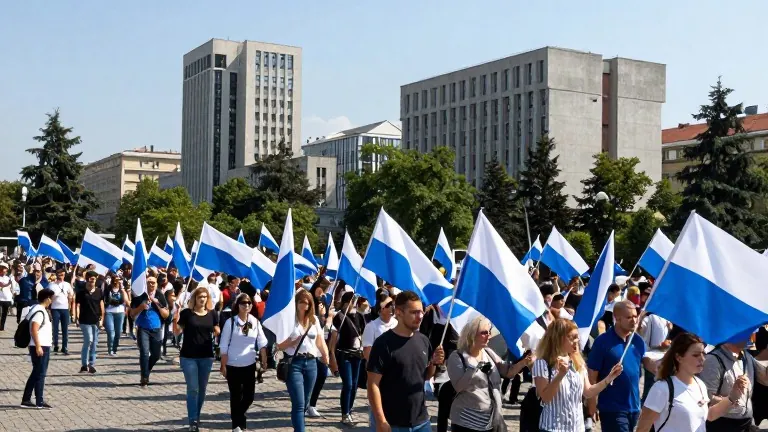
A leaderless student movement in Serbia secured 141 of 250 parliamentary seats on Sunday, winning 53% of the vote in a result that ends the 14-year dominance of former President Aleksandar Vučić. The Centre for Free Elections and Democracy in Belgrade confirmed the figures after counting all ballot samples. Vučić’s Serbian Progressive Party took 39% of the vote and 103 seats, while national minority lists claimed the remaining seats.
The movement, known as the Student List, began organizing government formation talks on Monday. The group has no single leader or formal hierarchy, relying instead on collective decision-making. Its candidate slate included students, academics, actors, and farmers. Key figures in the movement include Ilija Srdanović, a cardiologist who headed the candidate list; Dejan Šoškić, a former central bank governor; and Radomir Saičić, a chemistry professor at Belgrade University who addressed the public after the victory.
Vučić conceded his defeat late on Sunday. His tenure followed two years of anti-government protests that began after a canopy collapse at the Novi Sad railway station killed 16 people. His rule had been characterized by control over media and judicial institutions, along with irregularities in voter registration and media coverage. The new government aims to reverse these structures through a platform focused on fighting corruption and restoring the rule of law.
Specific policy goals include creating an independent police unit accountable to prosecutors rather than the interior ministry and purging officers linked to organized crime. The group also plans to ban party loyalists from holding positions in state-owned companies. It will establish new independent bodies to audit all major state infrastructure contracts to ensure financial accountability and public scrutiny of government spending.
Ana Mirković, a Student List candidate and university educationist, stated that the movement views the election result as a debt to the people rather than a gain of privileges. She identified the first priority as the social and psychological detoxification of the country. Mirković said the goal is to dismantle a system of intimidation by opening up the media, ending pressure on public-sector workers, and stopping institutional violence.
Serbia’s constitution requires the new parliament to convene within 30 days of the official election result. A 90-day clock starts after the first session, setting a strict deadline for the formation of the new government. The country must also hold new presidential elections before December 27, 2026, as Vučić stepped down from the presidency to run for the prime ministerial post.
International leaders reacted to the shift in power on Monday. Ukrainian President Volodymyr Zelenskyy called the result a new chapter in the country’s history. German Chancellor Friedrich Merz said Berlin would actively support Serbia’s European path. Russian officials expressed hope that the new leaders would continue cooperation with Moscow, a position the Student List kept in the background during its campaign.