Holbrook Sake Maker Blends Japanese Craft with Navajo Ingredients
A Tokyo-born brewer operates a 200-gallon production facility on Route 66, creating award-winning beverages that incorporate local plants like Navajo tea.
By Alina Campbell ·
Route 66 in Arizona hosts a small-scale distillery where traditional Japanese fermentation meets Navajo agricultural traditions. The operation, known as Arizona Sake, is located just off the highway in Holbrook.
Atsuo Sakurai, who moved from Tokyo to the United States after working in the sake industry in Japan, runs the business with his wife, Heather. Sakurai stated that he initially dreamed of establishing a sake manufacturing business anywhere in the world. He noted that visitors are frequently surprised to learn the product originates from Holbrook rather than a major metropolitan area.
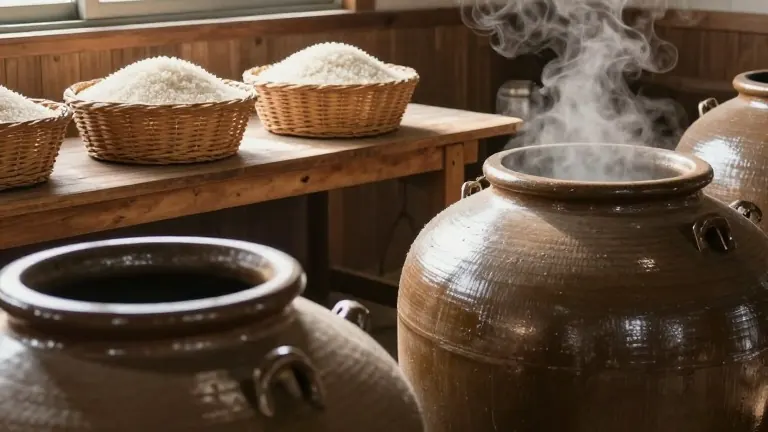
The production process relies on manual labor and specific timing. Workers wash and heat rice in baskets before transferring the grain into 200-gallon vats for fermentation. Once the fermentation period concludes, the liquid is pressed out under pressure, similar to the processing of mash. Sakurai calculated that the entire cycle from raw rice to finished bottle takes approximately three months.
The couple integrates Heather’s Navajo heritage into the product line. Sakurai confirmed that one specific variety uses Navajo tea, a local plant, as a key ingredient. This combination distinguishes the beverage from standard Japanese sake, which is typically made solely from fermented rice.
The shop produces both traditional styles and experimental flavors. Sakurai described the aroma of certain batches as resembling pear or blueberry. Some creations are exclusive to the Holbrook location. One visitor who sampled a specific brew identified a strong prickly pear flavor, describing the taste as distinctly Arizona.
Sakurai has received awards for his sake in competitions held in Japan and internationally. He views the slow, hands-on nature of the work as a counterbalance to modern automation and artificial intelligence. He expressed a desire to preserve this type of manual industry.
Asked if the business will still be operating in one hundred years, Sakurai responded with hope for its longevity, paralleling the historical resilience of other Route 66 establishments that survived the arrival of the interstate highway system.
More Business · Buyer Beware · Report a business · Got a Story?