Apple's $399 iPod Marks 25 Years as a Market Disruptor
The 2001 launch of the original iPod reshaped the portable audio market by offering 5GB of storage in a compact form factor, challenging established hardware players.
By Samir Doyle ·
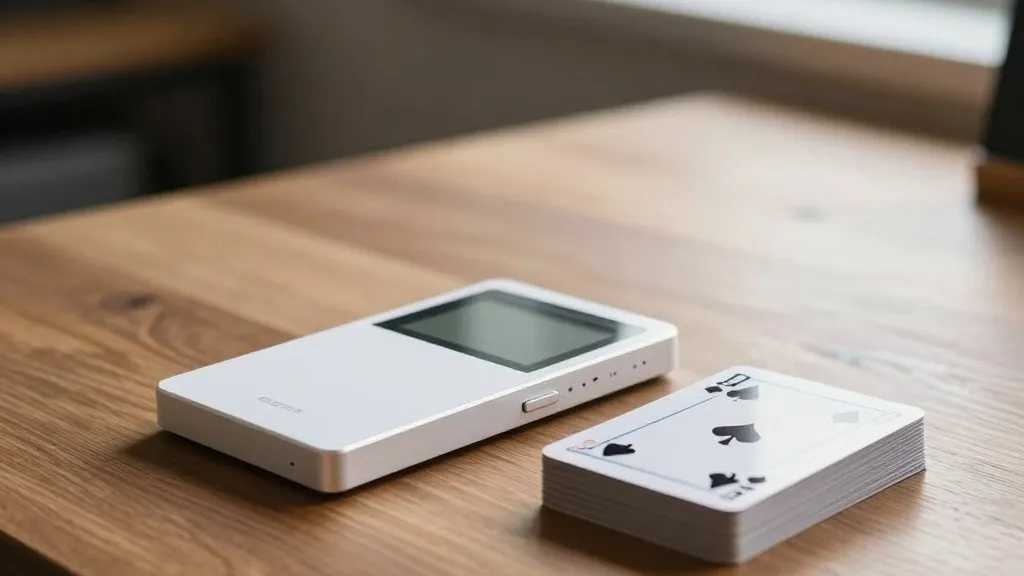
Exactly 25 years ago, Apple introduced a digital music player that fundamentally altered the consumer electronics landscape. The device was priced at $399 and promised to hold 1,000 songs in a package no larger than a standard deck of cards. This launch represented a significant strategic pivot for the Cupertino-based firm, which had recently stabilized its financial footing after the dot-com bubble burst.
The primary commercial argument for the product was its ability to consolidate a user's entire music library into a single portable unit. At the time of the announcement, the market for portable digital audio was fragmented. Companies like Sony, Creative, and Sonic Blue already offered competing devices, but industry observers noted that none had successfully defined the user experience. Apple identified a gap in the market for a high-capacity storage solution that did not rely on optical media or limited flash memory.
The hardware specifications were central to the device's value proposition. The player utilized a 1.8-inch hard drive from Toshiba, which was notably thin at 0.2 inches. This component allowed the final product to measure 2.4 by 4 by 0.78 inches and weigh just 6.5 ounces. The company positioned the device as lighter than most mobile phones of that era, emphasizing portability as a key driver of consumer adoption.
Data transfer speed was another critical differentiator in the competitive landscape. The device featured a FireWire 400 connection, which Apple claimed could transfer the contents of a full CD in as little as five to 10 seconds. In contrast, contemporary USB connections required approximately five minutes for the same data volume. For a full library of 1,000 tracks, the estimated transfer time was 10 minutes compared to five hours on competing USB-based players. This efficiency was highlighted as a major advantage for users managing large media collections.
The launch was accompanied by the release of iTunes 2, which integrated with the player through an automatic syncing feature. This software allowed users to maintain their curated libraries on their Mac computers while ensuring the portable device remained up to date. The hardware also included a rechargeable lithium-polymer battery, which provided 10 hours of continuous playback. Apple noted that the battery could be recharged to 80 percent capacity within one hour.
The product line persisted for over two decades, coexisting with the iPhone, which debuted in early 2007. The final model, the 7th-generation iPod Touch, was released in May 2019. Although the product line was left without updates for several years, it was officially discontinued in May 2022. The original release remains a benchmark for how hardware innovation and software integration can create a dominant market position in a crowded sector.
More Business · Buyer Beware · Report a business · Got a Story?