161 Kilometers Per Hour: The Limit That Slowed Ukraine's Defense
Ukraine claims Starshield connectivity has been fully restored after weeks of speed throttling.
By Samir Doyle ·
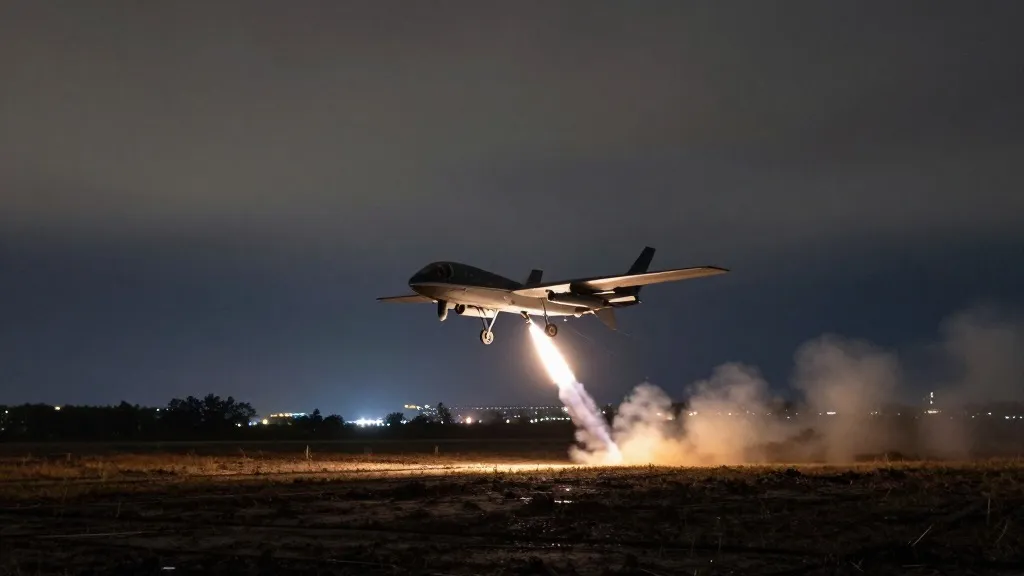
Ukraine claims to have regained full-speed access to key satellite communications, ending a restriction that Kyiv said severely hampered its military operations. Ukrainian President Volodymyr Zelenskyy announced on October 24 that the Starshield system is once again operating at its prior performance levels. He described the change as very important and significant for frontline logistics and for countering jet-powered Shahed drones.
The service, developed by SpaceX, is designed for military use and operates alongside the company's commercial Starlink network. Ukraine relies heavily on both systems. Defense Minister Yevheniy Khmara confirmed that monitoring equipment recorded connectivity being restored for platforms moving faster than 400 kilometers per hour. This follows a period where a Ukrainian official noted that links were dropping at speeds just above 161 kilometers per hour, sharply limiting drone interceptors.
Questions regarding who imposed the initial limits remain unresolved. An adviser to Zelenskyy on defense technology suggested the restrictions were connected to recent tensions between Kyiv and Washington, though that link has not been verified. The Trump administration has denied that the president or anyone in the U.S. government requested the changes. Elon Musk has stated that the government controls Starshield, with decisions ultimately resting with the military and President Donald Trump.
A report published earlier this week by the Wall Street Journal, citing U.S. officials, claimed that Trump called Musk to urge him to lift the restrictions. When asked about the call, Trump declined to comment but stated, "if there is a problem, I will get it straightened out." Meanwhile, lawmakers in Congress from both parties have requested information on who authorized the changes and seek guarantees regarding Ukraine's access.
The reported limits on access emerged during a time of tension. In the past two weeks, Trump announced a deal encouraging Russian diesel exports and waived sanctions that were slated to take effect. He has also urged Kyiv to pause attacks on Russian oil refineries, attributing high diesel prices to those strikes. After Russian President Vladimir Putin ordered attacks on Ukraine to continue, Zelenskyy stated that Kyiv is done with pausing unilaterally.
Overnight, Ukrainian air defense forces reported shooting down 100 of 130 drones launched by Russia, while strikes on 15 locations resulted in at least two deaths. Ukraine's General Staff reported hitting industrial facilities in Russia, including a plant in Oryol producing missile components and a facility in Togliatti making rubber for solid rocket fuel. Separately, a power outage struck Russian-occupied Crimea, including Simferopol and Sevastopol. A Russian-appointed official attributed the blackout to a disruption to main power lines outside the region caused by a drone attack.
The cause of the blackout has not been independently confirmed, and Ukraine has not commented on the incident. A fire was reported at the Taman electrical substation in Russia's Krasnodar region, which supplies Crimea via the Kerch Strait. As a fifth wartime winter approaches, peace talks remain stalled, and the Kremlin has offered no concessions.